
Cyber Awareness Campaign
Event Date: 29th September 2026
Event Brief Description
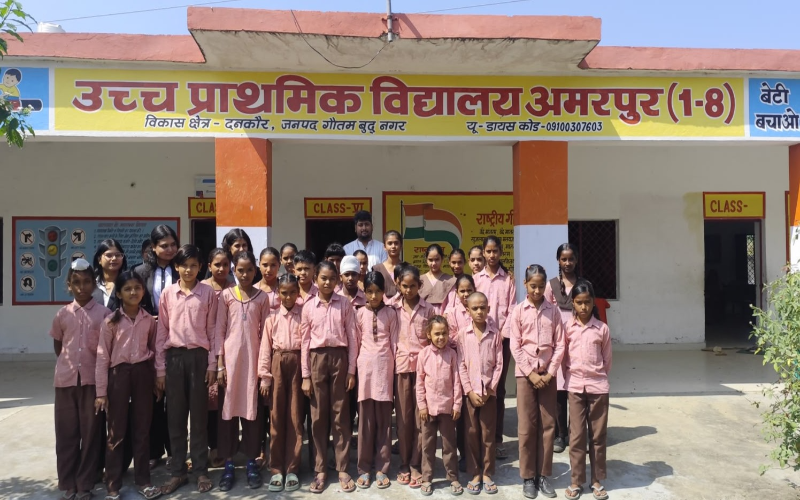
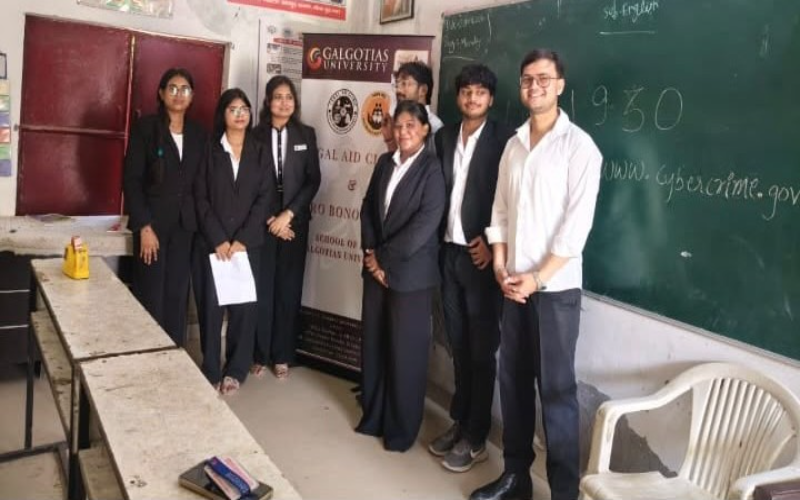
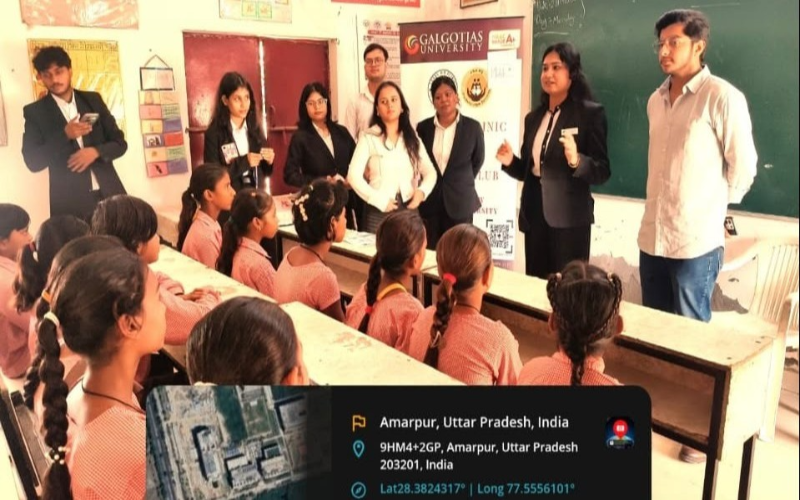
On 29th September 2026, the Legal Aid Clinic and Pro Bono Club, School of Law, Galgotias University, in collaboration with Naksh Foundation, conducted a Cyber Awareness Campaign at Amarpur Government School. The activity was facilitated by Adrija, with Aryan, Aditya, Amrita, Zashmine, Bharti and Vishesh supporting the programme. Approximately 40 students between the ages of 7 and 16 years participated in the session.
The campaign focused on creating awareness about emerging cyber risks through an interactive skit on AI-generated deepfakes, morphed images and cyber blackmail. The skit presented a realistic situation and demonstrated how victims may be placed under fear and pressure by cybercriminals. Students were guided on how to respond safely and responsibly instead of reacting impulsively.
Key issues discussed included cyber blackmail, online threats, cyberbullying, online harassment, risks of paying blackmailers, preservation of digital evidence, seeking help from trusted persons and reporting cybercrime. Participants were encouraged to preserve screenshots, messages and profile details, remain calm, avoid silence or shame, and seek appropriate assistance.
The session concluded with the message “THINK → VERIFY → PRESERVE EVIDENCE → REPORT.” Students were also informed about the Cyber Crime Reporting Portal, cybercrime.gov.in, and helpline 1930 for online financial fraud.
Event Brief Description
On 29th September 2026, the Legal Aid Clinic and Pro Bono Club, School of Law, Galgotias University, in collaboration with Naksh Foundation, organised a Cyber Awareness Campaign at Amarpur Government School. The programme was conducted for approximately 40 students belonging to the age group of 7 to 16 years. Adrija served as the project facilitator, while Aryan, Aditya, Amrita, Zashmine, Bharti and Vishesh contributed to the execution of the awareness activity. The campaign was designed to introduce students to important cyber safety practices and to create awareness regarding emerging forms of online abuse.
The central feature of the programme was an interactive skit based on AI-generated deepfakes, morphed images and cyber blackmail. The skit presented a realistic cyber-blackmail situation to help students understand how digital content can be manipulated and how cybercriminals may use fear, threats and psychological pressure to control a victim. The interactive format made the subject easier to understand and encouraged students to view cyber safety as a practical part of their everyday digital behaviour.
During the session, participants were made aware of several important cyber risks. The discussion covered AI-generated deepfakes and morphed images, cyber blackmail and online threats, cyberbullying and online harassment. Students were also informed about the risks of making payments to blackmailers. A key message was that payment does not guarantee that a blackmailer will stop and may lead to repeated demands. The participants were therefore encouraged to avoid responding to pressure impulsively and to seek assistance from trusted persons.
Another important component of the campaign was awareness regarding the preservation of digital evidence. Students were advised to retain screenshots, messages, profile details and other relevant digital information when faced with cybercrime or online harassment. Such information can be useful while seeking assistance and reporting an incident. The session also emphasised that victims should not feel ashamed or remain silent. Students were encouraged to approach parents, teachers, guardians or other trusted persons whenever they encounter a threatening, suspicious or uncomfortable online situation.
The campaign further promoted basic online safety and responsible use of digital platforms. Students were encouraged to remain alert while sharing personal information and not to blindly trust digital images, videos or voice content. The importance of verification before believing or sharing digital material was highlighted. The programme also introduced the Cyber Crime Reporting Portal, cybercrime.gov.in, as an appropriate reporting channel and informed participants about helpline 1930 for online financial fraud.
The session concluded with the key message “THINK → VERIFY → PRESERVE EVIDENCE → REPORT.” This message summarised the principal learning of the campaign and provided students with a simple framework for responding to cyber risks. Overall, the awareness drive sought to promote responsible digital behaviour, encourage timely reporting, strengthen awareness of emerging cyber threats and create a supportive attitude towards victims of cybercrime.
Department Name: School of Law
Related Goal