
Guest Lecture on Reimagining Dispute Resolution: AI, Innovation & The Future of ADR
Event Date: 12th September, 2026
Event brief description
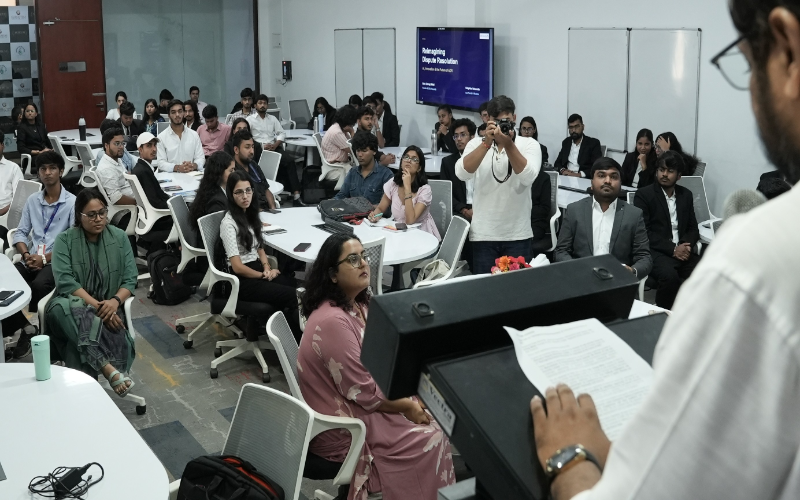
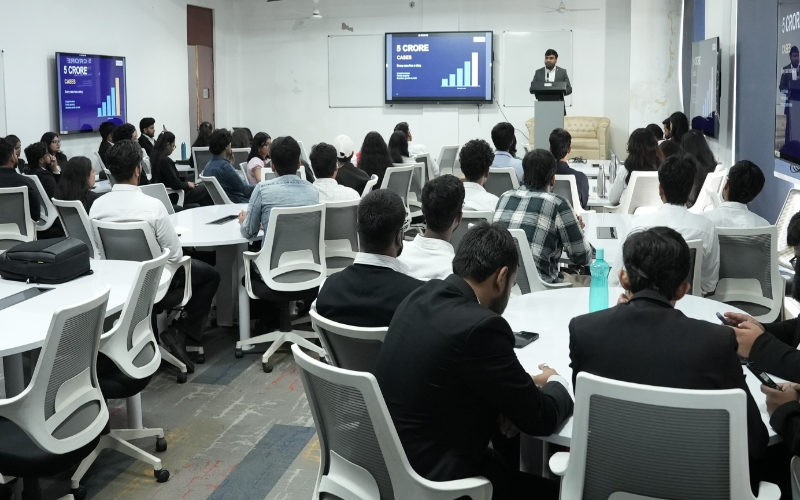
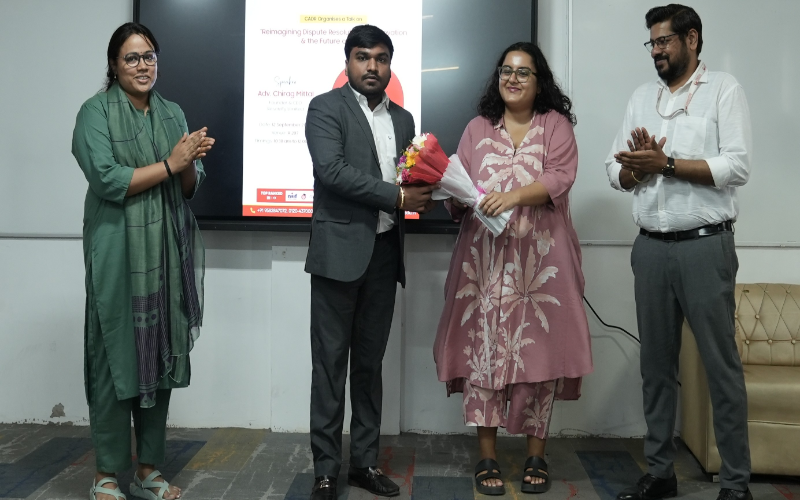
The Centre for Alternative Dispute Resolution (CADR), School of Law, Galgotias University, organised an expert session on the intersection of legal practice, technology, artificial intelligence and alternative dispute resolution. The session addressed the growing need for effective ADR and Online Dispute Resolution mechanisms in the context of the substantial backlog of cases in Indian courts. It introduced students to the statutory framework under Section 89 of the Code of Civil Procedure, the development of mediation law, and the role of technology and AI in contemporary dispute resolution. The session also explored professional responsibility, confidentiality, neutrality and human accountability while using AI-enabled legal technologies. Career pathways in mediation, ODR, legal technology and pre-litigation strategy were also discussed.
Event Detailed Description
- The session commenced at 10:45 AM in Room A-207 and was delivered by Adv. Chirag Mittal, Founder & CEO of Resolvify.
- The discussion began with the current judicial backlog and the need for non-litigative mechanisms capable of providing timely dispute resolution. Alternative Dispute Resolution (ADR) and Online Dispute Resolution (ODR) were discussed as mechanisms that can reduce prolonged litigation delays.
- Section 89 of the Code of Civil Procedure was examined with reference to the four dispute-resolution mechanisms: arbitration, conciliation, judicial settlement including Lok Adalat, and mediation. The discussion also referred to the development of mediation law through decisions including Salim Bar Association and Afcons Infrastructure Ltd.
- The session addressed Section 12A of the Commercial Courts Act and the framework of mandatory pre-institution mediation, with reference to Patil Automation v. Rakheja Engineers.
- A dedicated segment focused on technology and Artificial Intelligence in dispute resolution. AI-assisted functions discussed included language translation, document summarisation and establishing realistic settlement ranges. Platforms such as ODR, e-Daakhil and e-Lok Adalats were also discussed.
- Strong emphasis was placed on professional responsibility. It was highlighted that AI can assist in processing information but cannot replace the legal professional's duty to think, exercise judgment, maintain confidentiality and remain accountable for the final legal decision.
- The session concluded with discussion of emerging career pathways, including Mediator, ODR & Legal-Tech Specialist, Pre-Litigation & Mediation Strategist, and AI + Law Governance Consultant.
Department Name: School of Law
Event Outcome
The session enhanced students' understanding of ADR, mediation, ODR and the statutory framework governing dispute resolution. It provided exposure to emerging applications of AI and legal technology in dispute resolution while reinforcing professional responsibility, confidentiality, neutrality and human accountability. The discussion also familiarised students with emerging professional pathways in mediation, ODR, legal technology and pre-litigation strategy.
Related Goal