One-Day Online Workshop on Hands-On With NVIDIA: Fundamentals of Deep Learning
Event Date: 13th Dec 2025
Event brief description
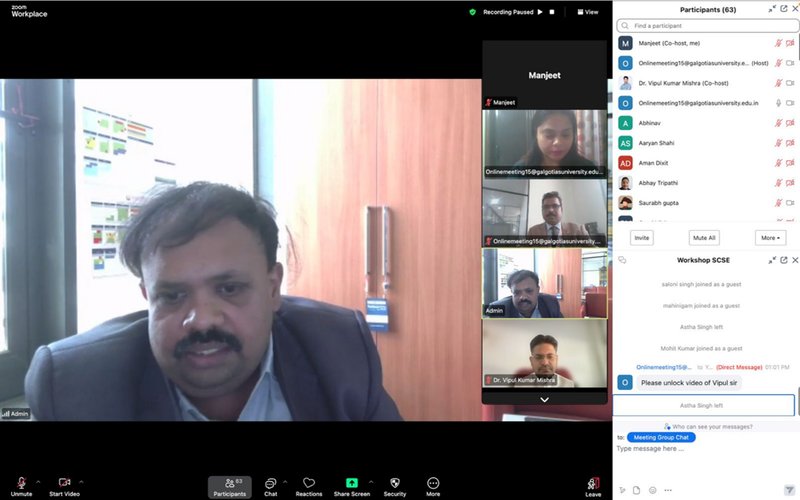
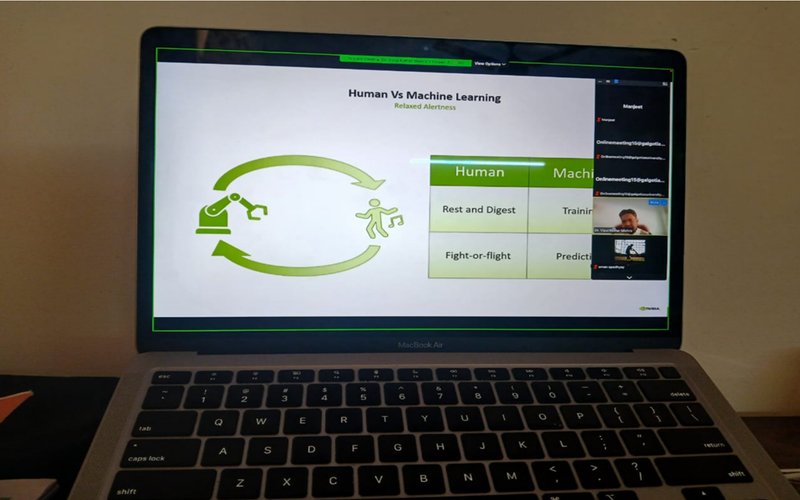
The Department of Artificial Intelligence and Data Science, School of Computer Science & Engineering, Galgotias University, successfully organized a 1-Day Online Workshop on “Hands-on with NVIDIA: Fundamentals of Deep Learning” on 13 December 2025. The workshop was designed to provide students with a strong foundation in deep learning concepts along with practical exposure using NVIDIA’s AI ecosystem. The session focused on core deep learning fundamentals, including neural networks, training workflows, and real-world AI applications. Emphasis was placed on hands-on learning, enabling participants to understand how deep learning models are built, trained, and optimized using GPU acceleration. The workshop highlighted the role of NVIDIA technologies in accelerating AI and data science workloads and bridging the gap between theory and industry-ready skills. The expert session was delivered by Dr. Vipul Kumar Mishra, Associate Professor at Gati Shakti Vishwavidyalaya, Vadodara, who shared valuable academic insights and practical perspectives gained from his international research experience. The interactive format encouraged active participation, discussions, and problem-solving. Overall, the workshop provided an enriching learning experience and helped participants enhance their understanding of deep learning fundamentals, aligning with current industry trends and the growing demand for AI-driven solutions.
Event Detailed Description
The Department of Artificial Intelligence and Data Science, under the School of Computer Science & Engineering (SCSE), Galgotias University, organized a 1-Day Online Workshop titled “Hands-on with NVIDIA: Fundamentals of Deep Learning” on 13 December 2025, from 1:00 PM to 5:00 PM in online mode. The workshop was planned with the objective of strengthening conceptual understanding and providing practical exposure to deep learning using industry-standard tools and GPU-accelerated platforms. The workshop aimed to bridge the gap between theoretical knowledge and real-world implementation of deep learning models. It focused on introducing participants to the fundamentals of deep learning, including artificial neural networks, training mechanisms, optimization techniques, and the significance of GPUs in accelerating AI workloads. Special emphasis was placed on NVIDIA’s role in enabling high-performance computing for AI and data science applications. The expert session was conducted by Dr. Vipul Kumar Mishra, Associate Professor at Gati Shakti Vishwavidyalaya, Vadodara, and Post-Doctoral Researcher from the University of Kentucky, USA. With his strong academic and research background, Dr. Mishra provided deep insights into modern deep learning practices, real-world use cases, and emerging trends in AI. The session included demonstrations, conceptual explanations, and discussions on how deep learning is applied across domains such as computer vision, natural language processing, and intelligent systems.
The workshop followed an interactive and hands-on approach, encouraging participants to actively engage through discussions, queries, and problem-solving activities. Participants gained exposure to practical aspects of model training and performance improvement using NVIDIA’s AI ecosystem. Overall, the workshop proved to be highly beneficial for students enhancing their technical competencies and awareness of industry-relevant tools. The event successfully contributed to skill development, research orientation, and preparedness for future advancements in artificial intelligence and deep learning.
Department Name –School of Computer Science and Engineering, Department of Artificial Intelligence and Data Science (AIDS)
Event Outcome
The workshop successfully equipped participants with practical knowledge in grant writing and generative AI. Students gained hands-on experience with NVIDIA deep learning tools and earned certifications. The sessions fostered interdisciplinary collaboration, enhanced research capabilities, and inspired future innovations in AI. Feedback indicated high satisfaction and demand for future editions.

Related Goal