
Session on Innovation/Prototype Validation - Converting Innovation into a start-up
Event Date: December 17, 2025
Event brief description
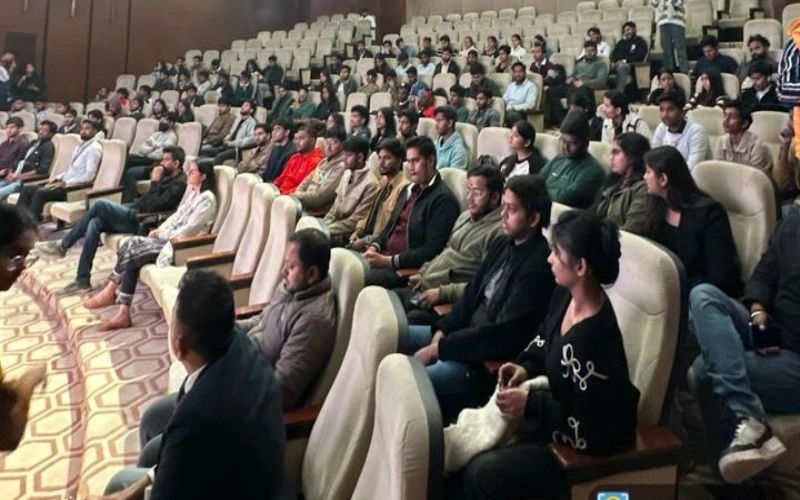
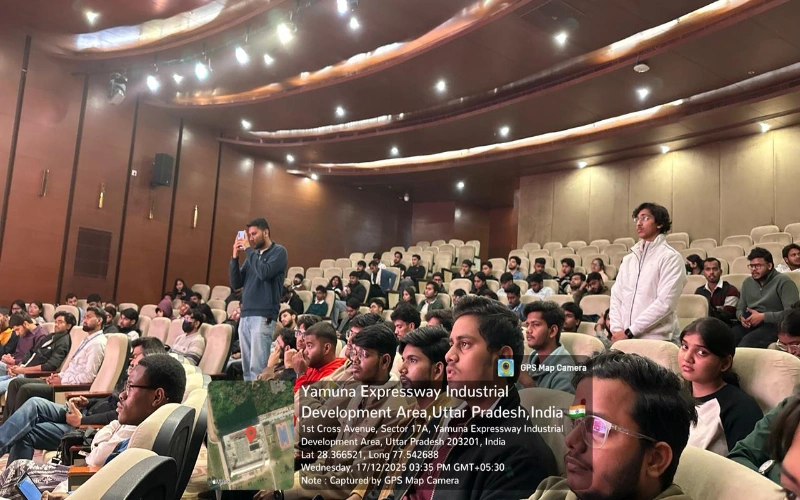
A session on Session on Innovation/Prototype Validation - Converting Innovation into a start-up’ was conducted on December 17, 2025 from 3 PM to 4 PM in Vivekanand Auditorium. The event was organised by Dr Surinder K Dhingra (Professor-SoB) and was related to SDG-4. The resource person was Mr Kamal Kishor Malhotra – CEO (Chief Executive Officer, Galgotias Incubation Centre For Research Innovation, Startup & Entrepreneurs (GICRISE), Galgotias University, Greater Noida, Uttar Pradesh-203201. The objective of the event was to acquaint the students with comprehensive knowledge of Innovation and prototype validation.
Event Detailed Description
A session on Session on Innovation/Prototype Validation - Converting Innovation into a start-up’ was conducted on December 17, 2025 from 3 PM to 4 PM in Vivekanand Auditorium. The event was organised by Dr Surinder K Dhingra (Professor-SoB) and was related to SDG-4. The resource person was Mr Kamal Kishor Malhotra – CEO (Chief Executive Officer, Galgotias Incubation Centre For Research Innovation, Startup & Entrepreneurs (GICRISE), Galgotias University, Greater Noida, Uttar Pradesh-203201. The objective of the event was to acquaint the students with comprehensive knowledge of Innovation and prototype validation.
Innovation is the process of transforming a creative idea into a practical solution that creates value for customers and society. However, innovation alone does not guarantee success; it must be validated through systematic prototype testing before it can be converted into a sustainable start-up. Prototype validation acts as a bridge between an idea and a viable business model.
Prototype validation involves developing an early version of a product or service and testing it with real users. This stage helps entrepreneurs verify whether the innovation actually solves a customer problem, meets user expectations, and delivers tangible benefits. Through methods such as pilot testing, minimum viable products (MVPs), user feedback, and market experiments, innovators can identify design flaws, usability issues, and unmet needs at an early stage. Validation reduces uncertainty, minimizes financial risk, and prevents costly failures after full-scale launch.
Once a prototype is validated, the focus shifts to converting the innovation into a start-up. This requires refining the value proposition, identifying the target market, and developing a scalable business model. Entrepreneurs must decide on pricing strategies, distribution channels, and revenue streams based on insights gained during validation. At this stage, building a competent team, securing funding, and establishing operational processes become critical.
Conversion into a start-up also demands a shift from a product mindset to a customer-centric mindset. Continuous learning, iteration, and adaptability are essential as market conditions evolve. A validated prototype provides credibility, making it easier to attract investors, partners, and early adopters.
In conclusion, innovation achieves real impact only when supported by rigorous prototype validation and strategic conversion into a start-up. By systematically testing ideas, learning from the market, and scaling responsibly, entrepreneurs can transform innovative concepts into successful and sustainable ventures.
Department Name: SoB

Related Goal