Day 4 of Five Days Certified Training Program on Mediation In collaboration with AIIMAS
Event Date: 13th November 2025
Event brief description
Day 4 began with Ms. Anupam Dhingra recapping mediation’s definition and process, emphasizing its connection to democratic principles and essential communication skills like active listening and clear expression. Mr. Surender Singh then led a session on negotiation and bargaining, involving a role play that illustrated different negotiation types and techniques, followed by group discussion to deepen understanding.
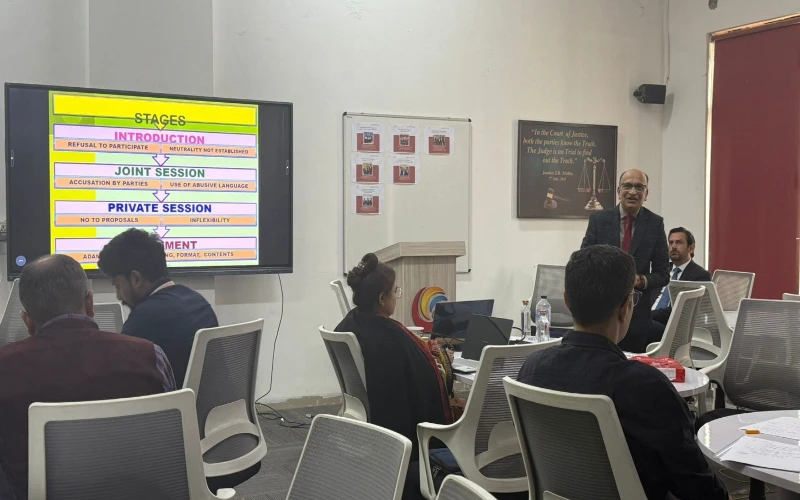
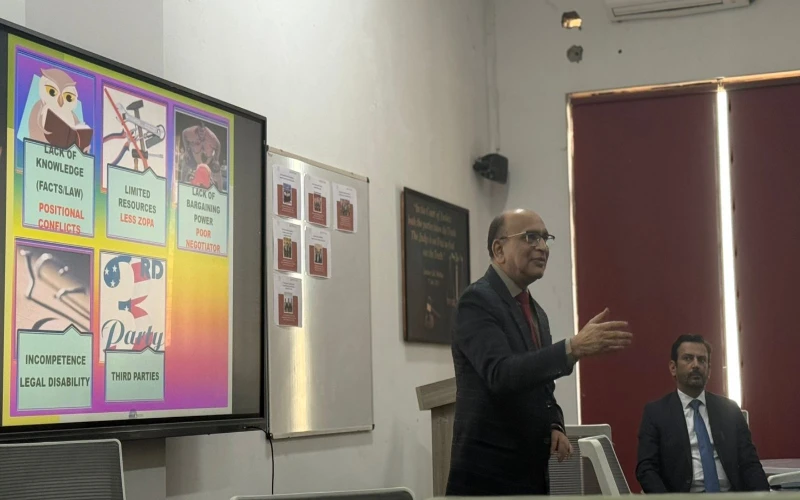
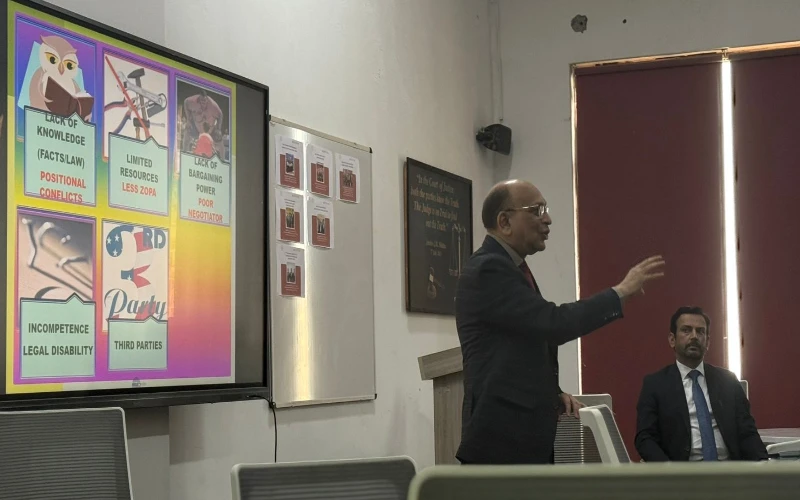
Justice Dr. Sudhir Kumar Jain highlighted the importance of communication in mediation, differentiating the problem from the people involved, and encouraged logical and lateral thinking. He contrasted traditional adjudication and mediation, urging a mindset change to promote private mediation beyond courts. The session examined conflict perception as the root of disputes and discussed mediation stages and questioning strategies essential for developing bargaining options.
The second part addressed impasse, exploring causes such as resistance, lack of creativity, and emotional or procedural barriers. Mediator approaches to managing impasse, including maintaining positive attitudes and using reflection techniques, were covered. Practical impasse management strategies were introduced, including assessing options, lateral thinking, restructuring mediation, and using external resources. Techniques like BATNA, role reversal, and impasse avoidance equipped participants with skills to resolve conflicts flexibly and creatively.
Event Detailed Description
Resource Persons: Justice Dr. Sudhir Kumar Jain, Mr. Surender Singh, and Ms. Anupam Dhingra
On 13 November 2025, the fifth and final day of the Specialised Mediation Training Programme commenced with an address by Hon’ble Justice Rajendra Menon. Joining virtually, Justice Menon expressed deep appreciation for Galgotias University for pioneering this structured 40-hour mediation training for its faculty. He reflected on the reluctance often seen among legal professionals to undergo professional training and emphasised the transformative value such programmes bring. He highlighted how structured training enhances communication, nurtures empathy, inculcates forgiveness, builds confidence, and strengthens resilience—qualities essential for educators and mediators.
Session 1: Commercial Mediation and Pre-Institution Settlement
The first academic session of the day was conducted by Mr. K. K. Mukhija, who introduced participants to Section 12A relating to pre-institution mediation and settlement. He explained the legislative intent behind making mediation mandatory before filing certain commercial suits and discussed its significance in reducing the burden on commercial courts. Mr. Mukhija also elaborated on key amendments introduced through the Commercial Courts Act, 2015, offering clarity on how these provisions encourage parties to resolve disputes early and efficiently. Through examples and practical illustrations, he walked participants through the procedural stages of pre-institution mediation and its growing relevance in commercial dispute resolution.
Session 2: Understanding the Mediation Act, 2023
The second session was led by Ms. Jaya Goyal, who delivered a comprehensive lecture on the Mediation Act, 2023. She began by outlining the purpose and philosophy of the Act, noting how it aims to institutionalise mediation in India and promote it as an accessible, efficient, and participatory dispute resolution mechanism. She discussed the structure and functions of key bodies under the Act, including the Mediation Council of India, Mediation Institutions, and Mediation Service Providers.
A detailed explanation was provided on the concept and drafting of a Mediation Agreement, its legal effect, and how parties use it for the appointment of mediators. Ms. Goyal also clarified the provisions relating to the appointment, role, and termination of mediators, as well as the sequence of mediation proceedings, including confidentiality, neutrality, and voluntary participation. She concluded with insights into the Mediation and Conciliation Rules, emphasising how they complement the statutory framework.
Valedictory Session: Reflections and Closing
The programme concluded with a dignified Valedictory Ceremony, during which a summary of all five days was presented. Gratitude was extended to all resource persons and to AIIMAS patrons Hon’ble Justice Rajendra Menon and Hon’ble Justice Sudhir Kumar Jain for their invaluable guidance.
The ceremony was graced by the Vice-Chancellor, Registrar, senior dignitaries, and faculty members. Prof. (Dr.) Aditya Tomer, Dean of the School of Law, delivered the welcome address. A key highlight of the ceremony was the awarding of Certificates of Completion to 30 faculty members, acknowledging their successful participation in the 40-hour training.
The ceremony concluded with thoughtful remarks by Ms. Jaya Goyal, Mr. K. K. Mukhija, Dr. Nitin Kumar Gaur (Registrar), and Dr. K. Mallikharjuna Babu (Vice-Chancellor), marking a meaningful end to an enriching and transformative training programme.
Department Name –School of Law
Event Outcome
The training session held on 13 November 2025 effectively deepened participants’ understanding of mediation, negotiation, and impasse management. Guided by Justice Dr. Sudhir Kumar Jain, Mr. Surender Singh, and Ms. Anupam Dhingra, the sessions enhanced conceptual clarity on communication, logical and lateral thinking, and the mediator’s role in fostering collaboration. Practical exercises on negotiation and role play strengthened participants’ problem-solving and consensus-building abilities. The discussion on impasse causes and management strategies equipped attendees with tools to handle deadlocks through creativity, empathy, and flexibility. Overall, the program successfully achieved its objective of building advanced mediation skills and reinforcing the importance of ethical, interest-based conflict resolution.
Related Goal