
Day-4: The master class by Justice U. U Lalit, Lecture series on Constitution for the date 13-09-2025. “Dealing on affirmative actions”
Event Date: 13-09-2025
Event brief description
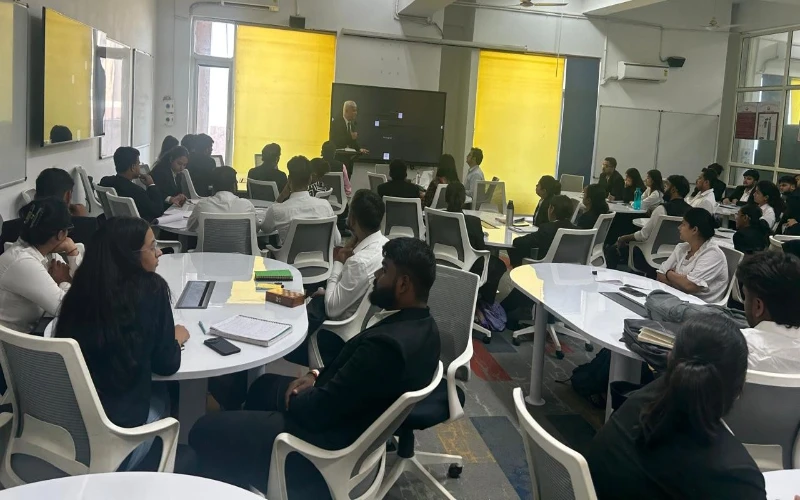
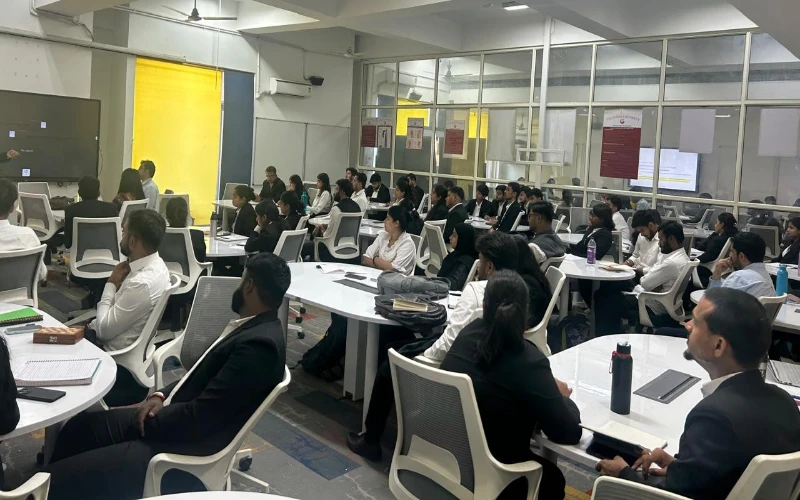
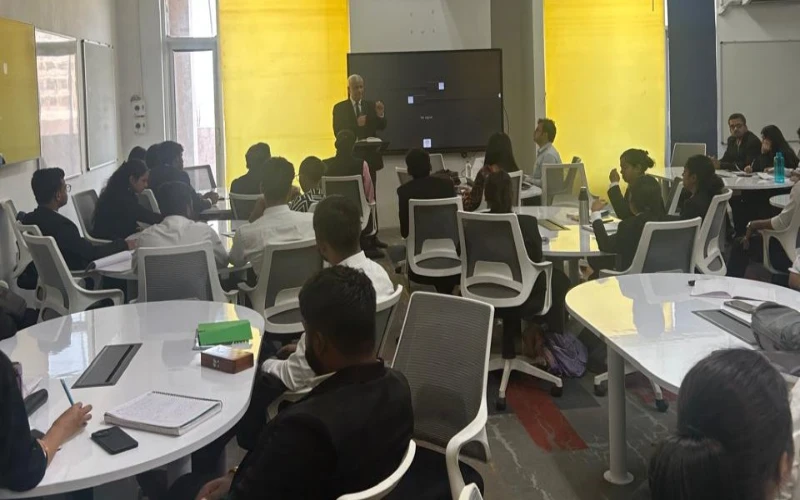
This distinguished lecture by Justice U.U. Lalit, focusing on the evolution of affirmative action in India from its inception in the Constituent Assembly, its crystallization in constitutional morality, and how landmark judicial and commission-led interventions have shaped reservation policies.
Justice Lalit traced the origins of affirmative action to the debates and aspirations of the Constituent Assembly. He emphasized the vision of social justice and equality embedded in the Constitution, and how these ideals informed legislative and policy initiatives across decades.
Event Detailed Description
This distinguished lecture by Justice U.U. Lalit, focusing on the evolution of affirmative action in India from its inception in the Constituent Assembly, its crystallization in constitutional morality, and how landmark judicial and commission-led interventions have shaped reservation policies.
Justice Lalit traced the origins of affirmative action to the debates and aspirations of the Constituent Assembly. He emphasized the vision of social justice and equality embedded in the Constitution, and how these ideals informed legislative and policy initiatives across decades.
Justice Lalit explained the Mandal Commission’s objectives: to identify socially and educationally backward classes using eleven social, economic, and educational indicators, resulting in recommendations for extensive reservation not limited to Hindu castes but including non-Hindu communities as well.
- Non-Hindu communities: 16.16%
- Hindu Castes: 17.58%
- Backward Hindu castes and communities: 43.70%
- Backward non-Hindu communities: 8.40%
- Mandal estimated that 75% of the Indian population remained socio-economically disadvantaged
He explained that the commission’s approach was not to reinforce the traditional chaturvarna caste system, but to examine backwardness across all communities, including non-Hindus.
Justice Lalit cited Justice Jeevan Reddy’s judgment in Indra Sawhney, clarifying the scope of reservation and its constitutional validity. Key arguments and outcomes discussed:
- Mandal Commission recommended 27% reservation for OBCs, applicable only to direct recruitment, not promotions
- Justice Jeevan Reddy’s reasoning further illuminated the inclusion of OBCs among non-Hindu communities
- Balaji v. State of Mysore: Affirmed that reservation should not exceed 50%
- The introduction of the “non-creamy layer” concept post-protests ensured that the most disadvantaged benefited.
Justice Lalit emphasized that the Second Backward Classes Commission and subsequent office memoranda framed reservations to exclude promotions, focusing only on direct recruitment. He detailed how post-V.P. Singh’s office memorandum and public protest led to refinement of criteria, such as the non-creamy layer concept.
Justice Lalit raised enduring legal controversies:
- Whether a constitutional bench, under the aegis of Justice Ranganath Misra, could finally settle the legal position on reservation
- The content and scope of “Backward Class” under Article 16(4)
- Whether economic criterion alone is sufficient to define a Backward class under Article 16(4)
- If reservation in state services can exceed 50%, given repeated judicial cap set by the Supreme Court
He highlighted continuous judicial scrutiny and constitutional requirements to maintain the balance between affirmative action and administrative efficiency.
Justice U.U. Lalit’s lecture translates constitutional morality into contemporary realities, showing how affirmative action policies evolve through evidence, expert commissions, and landmark judicial pronouncements. He traced the journey from the Constituent Assembly’s vision to the complex, ongoing issues of reservation in modern India, calling for clarity, fairness, and fidelity to constitutional values.
Department Name –School of Law
Event Outcome
The special lecture provided an in-depth historical and legal analysis of affirmative action in India, charting its evolution from the foundational debates in the Constituent Assembly to contemporary implementation and judicial review. Justice U.U. Lalit offered valuable insights into the Mandal Commission’s purpose, its findings, and its broader impact on reservation policies, including how constitutional morality continues to shape these frameworks.
Related Goal