Day 2 of Five Days Certified Training Program on Mediation In collaboration with AIIMAS
Event Date: 11th November 2025
Event brief description
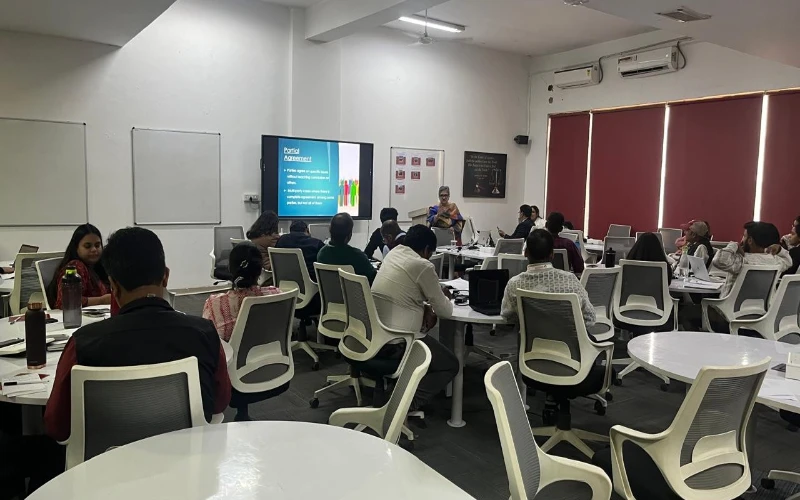
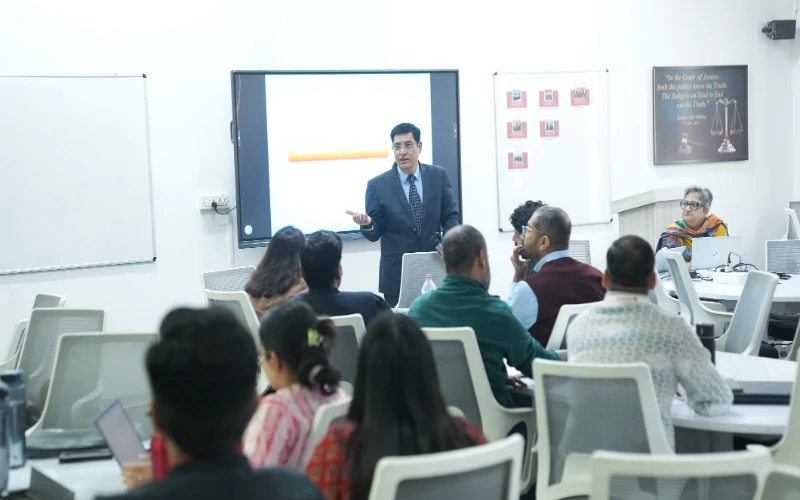
Second day of a Mediation Awareness Workshop was held on 11 November 2025, conducted by resource persons Mr. K. K. Mukhija and Ms. Jaya Goyal. The objective of the workshop was to introduce participants to the mediation process, role of the mediator, and the legal significance of mediated settlement agreements.
Mr. Mukhija explained that mediation is a voluntary, confidential, and interest-based method of dispute resolution. The mediation process includes introduction, understanding the problem, identifying underlying interests, and generating options for settlement. He emphasized that the mediator must remain neutral, facilitate communication, encourage participation, take notes, and lay ground rules. The concept of single or caucus sessions was also explained, where private discussions help in handling interpersonal conflicts. Two role plays were conducted on family disputes and animal welfare issues, allowing participants to practically observe mediator-party interactions.
The second session by Ms. Jaya Goyal focused on the Mediated Settlement Agreement under Section 19(1). She clarified that the settlement must be in writing, authenticated by the mediator, and may be partial. She discussed essential drafting requirements, such as proper identification of parties, clarity of terms, fairness, and absence of blame language. If no settlement occurs, only “Not Settled” is recorded, as per Moti Ram v. Ashok Kumar.
Event Detailed Description
Resource Persons: Mr. K.K. Mukhija and Ms. Jaya Goyal
On 11 November 2025, an enriching and interactive workshop on the Mediation Process and Mediated Settlement Agreements was organized. The session was conducted by two experienced experts in the field: Mr. K. K. Mukhija and Ms. Jaya Goyal. The objective of the workshop was to familiarize the participants with the mechanism of mediation, the role of a mediator, different stages of the process, and the legal validity of mediated settlement agreements. The session successfully blended theoretical understanding with practical demonstrations through role plays.
Session 1: Mediation Process by Mr. K. K. Mukhija
Mr. Mukhija initiated the session by explaining the meaning, nature, and purpose of mediation. Mediation was highlighted as a voluntary, confidential, and interest-based method of resolving disputes, where a neutral third party helps the disputing individuals arrive at a mutually agreeable solution.
The first step is introduction, during which the mediator conducts self-introduction, explains the nature of sessions (joint, private/caucus, and closing), and informs the parties about confidentiality and the mediator’s neutral role. This step sets the tone of trust and cooperation.
Next comes understanding the problem, where parties get an opportunity to present their issues and perspectives. Once the problem is understood, the mediator works toward identifying the underlying interests of each party. Instead of focusing only on positions, the mediator aims to uncover emotions, needs, and expectations. The final stage is creating options, during which the mediator facilitates brainstorming to develop possible solutions that benefit both sides.
Joint Session and Mediator’s Responsibilities
In a joint session, the mediator must encourage participation, facilitate communication, take important notes, lay down ground rules, and ask difficult or clarifying questions when needed. The role requires patience, neutrality, and strong communication skills.
Private / Caucus Session
A mediator may hold an individual or caucus session with either party or their counsel. The main objective is to handle interpersonal conflicts sensitively, allow parties to speak freely, and work toward clarity. Multiple sub-sessions may be conducted depending on the complexity of the dispute.
To provide practical exposure, two role plays were organized on the issues of love for animals and a family dispute. Faculty participants were divided into groups of six, where each group practiced mediator-party interaction and dispute resolution strategies.
Session 2: Mediated Settlement Agreement by Ms. Jaya Goyal
The second part of the workshop focused on the legal foundation of a Mediated Settlement Agreement (MSA) under Section 19(1). Ms. Goyal explained that a settlement cannot be oral; it must be in writing and authenticated by the mediator. A settlement may be partial or complete, and it may also include terms beyond the original dispute. Reference to Order 23 Rule 3 CPC emphasized enforceability of such settlements.
She further explained the essential components of an MSA:
- procedural satisfaction,
- subjective satisfaction of parties, and
- material satisfaction in terms of clarity and fairness.
While drafting an MSA, the mediator must ensure clear identification of parties, place and date, specific language describing who will do what and when, fair and balanced wording, no blame-assigning terms, and clear conditions. She also highlighted that in court-annexed cases, refund of court fees is allowed under Section 16 of the Court Fees Act.
If No Settlement
If parties fail to reach agreement, only the remark “Not Settled” is recorded, as established in Moti Ram vs Ashok Kumar. No reasons are given, and all statements remain confidential. The mediator must still appreciate parties for their sincere efforts.
Department Name –School of Law
Event Outcome
The Mediation Awareness Workshop held on 11 November 2025 successfully enhanced participants’ understanding of mediation as a peaceful and effective dispute resolution mechanism. Through detailed explanations and role-based demonstrations by Mr. K.K. Mukhija and Ms. Jaya Goyal, participants learned the stages of mediation, responsibilities of a mediator, and the structure of a Mediated Settlement Agreement. The session strengthened practical skills such as communication, confidentiality, and drafting settlement terms. Participants actively engaged in group activities and gained confidence in handling conflicts constructively. Overall, the event achieved its objective of promoting mediation awareness and encouraging its use in resolving disputes.
Related Goal