A Panel Discussion – Reading A Gateway of Greater Potential
Event Date: December 12, 2025
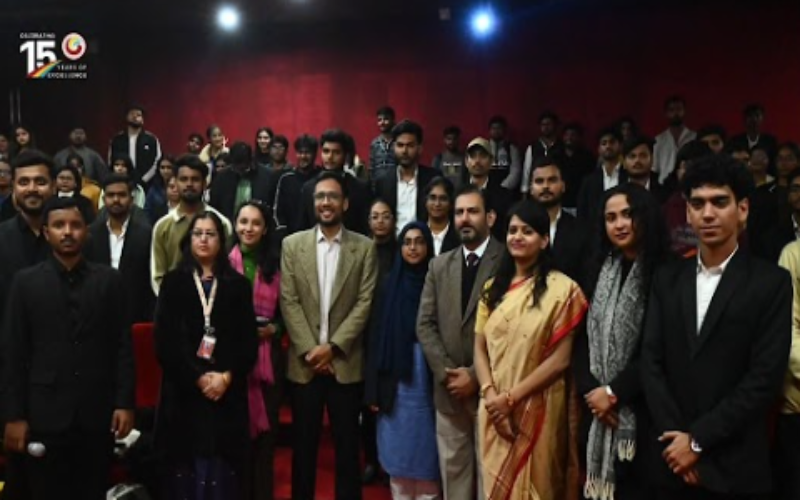
Event brief description – The Literary Society of the School of Law, Galgotias University organized a panel discussion titled “Reading: A Gateway of Greater Potential”, aimed at exploring the enduring relevance of reading in an era of rapid technological transformation.
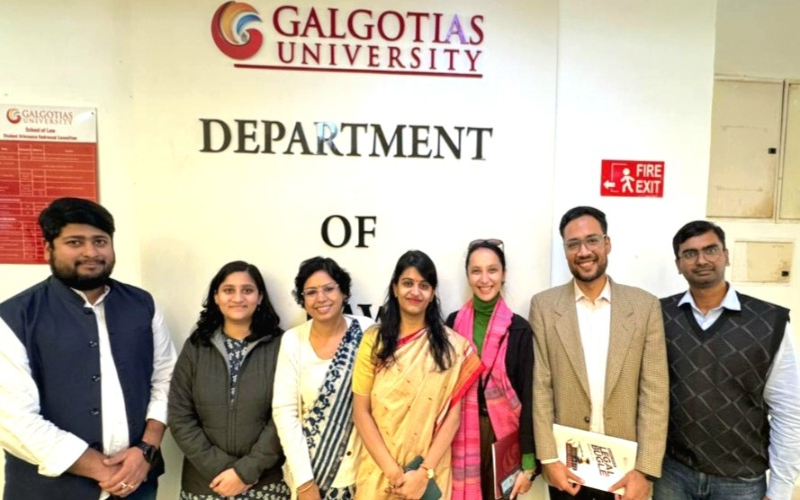
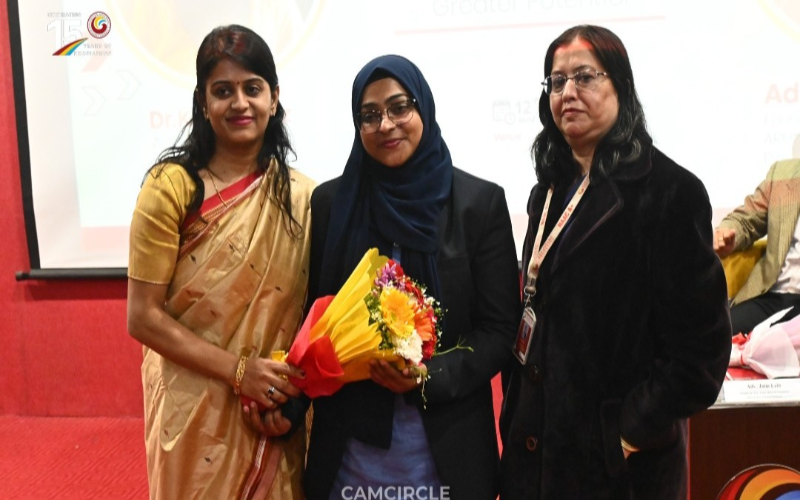
The event brought together two distinguished panellists—
Adv. Jatin Lalit, Founder of the Aruna Mithlesh Foundation (AMF),
Dr. Komal Naz, Assistant Professor at BIT Mesra, Ranchi—who offered interdisciplinary insights connecting reading, technology, and social impact.
Adv. Jatin Lalit emphasized reading as a practice rather than a format, highlighting its role in nurturing critical thinking, empathy, and sustained attention—skills that remain irreplaceable despite advances in digital media and artificial intelligence. Drawing from AMF’s initiatives in rural literacy, education, health, and livelihood development, he demonstrated how access to reading and education forms the foundation of empowerment and social transformation, inspiring students to view legal education as a catalyst for social entrepreneurship.
Dr. Komal Naz presented an innovative perspective on automating aesthetics through computational models for Hindi poetics, bridging computer science and literature. By explaining how traditional poetic structures can be analyzed using computational and probabilistic methods, she illustrated the intellectual property potential of interdisciplinary research. The panel reaffirmed that deep reading fosters curiosity, innovation, and meaningful engagement across disciplines.
Event Detailed Description- The Literary Society of the School of Law, Galgotias University organized a panel discussion titled “Reading: A Gateway of Greater Potential”, bringing together diverse perspectives on reading, technology, and innovation. The event featured two distinguished panellists—Adv. Jatin Lalit, Founder of the Aruna Mithlesh Foundation (AMF), and Dr. Komal Naz, Assistant Professor at BIT Mesra, Ranchi—who explored how reading continues to shape human cognition, creativity, and social transformation in the age of rapid technological advancement.
Adv. Jatin Lalit, a proud alumnus of Galgotias University, opened the discussion by framing reading as a practice rather than a format, emphasizing that the human need for deep reading survives every technological shift. Drawing from his experience as a social entrepreneur and founder of the Section 8 registered Aruna Mithlesh Foundation, incubated at IIM Bangalore’s NSRCEL Impact Orbit, he highlighted how reading fosters critical thinking, empathy, and sustained attention—capacities that technology cannot replace. He argued that while digital platforms, AI, and information overload dominate contemporary life, they further amplify the importance of disciplined and meaningful reading. Through AMF’s initiatives, including community libraries, mobile library projects, and rural development programs across education, health, and livelihood, he demonstrated how access to reading and education forms the foundation of empowerment and social equity. His journey inspired students to view legal education as a powerful tool for social entrepreneurship and advocacy.
The discussion was further enriched by Dr. Komal Naz, who presented an interdisciplinary perspective through her topic “Automating Aesthetic: Computational Models for Hindi Poetics and their IP Potential.” With a strong academic background in computer science and data analytics, Dr. Naz bridged the gap between technology and literature by examining how computational models can engage with the complex structure of Hindi poetics. She explained fundamental challenges in natural language processing, asserting that while machines handle language, they struggle with literature due to its aesthetic and structural depth. By decoding the syllabic framework of Laghu and Guru in Chhanda Shastra, she illustrated how traditional poetic systems lend themselves to probabilistic and mathematical analysis, opening avenues for innovation. The session also highlighted potential applications such as pronunciation correction tools and other patentable technologies rooted in literary computation.
Overall, the panel reaffirmed that reading remains central to intellectual growth and innovation, transcending disciplines and technological boundaries. The event successfully encouraged students to engage deeply with reading, think interdisciplinarily, and explore how knowledge—when combined with curiosity—can lead to meaningful social and technological impact.
Department Name – School of Law
Event Outcome: The panel discussion “Reading: A Gateway of Greater Potential” successfully achieved its academic and intellectual objectives by reinforcing the relevance of reading in an era dominated by technology. The event enhanced students’ understanding of reading as a sustained cognitive practice essential for critical thinking, empathy, and professional competence. Through Adv. Jatin Lalit’s insights, participants gained awareness of how literacy and education serve as foundational tools for social transformation and responsible social entrepreneurship, particularly within rural and underserved communities. Dr. Komal Naz’s interdisciplinary discourse exposed students to innovative intersections between technology, literature, and intellectual property, encouraging them to think beyond conventional disciplinary boundaries. The discussion inspired students to explore research-driven innovation, especially in areas where cultural knowledge can be translated into technological solutions. Overall, the event motivated participants to adopt deeper reading habits, pursue interdisciplinary learning, and recognize the role of intellectual curiosity in fostering sustainable social and technological development.
Related Goal